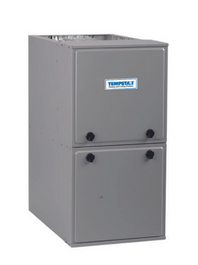
When a furnace stops working, whether it stops blowing out warm air or it starts making concerning noises, it can cause a lot of anxiety for homeowners who imagine extensive, costly fixes for major parts, especially since there are so many different parts in a furnace that could fail. What is the most common part to fail on a furnace? Across all types of heating systems, from gas furnaces to electric furnaces and heat pumps, the most common component to fail is the capacitor.
What Does a Capacitor Do?
A capacitor in an HVAC system is basically an electrical helper for motors. It stores energy to help the system turn on and run. Its job is to give motors a boost of energy to start and then provide a steady stream of energy to run efficiently once the motor is spinning. Capacitors are used in nearly every heating system, from gas furnaces to electric furnaces to heat pumps.
Even though other parts can fail, like the ignitor in a gas furnace or the compressor in a heat pump, the capacitor is by far the most common part to fail on a furnace because almost every system relies on one.
How To Tell If My Capacitor is Failing?
You can usually catch a failing capacitor before it completely gives out, even though some of the signs are subtle. Here’s what to look for:
- Humming or buzzing
- The motor hums but doesn’t start or struggles to get going. This is usually a start capacitor issue.
- Motors running slowly or intermittently
- Fans or blower motors spin slower than usual, or start then stop randomly.
- Frequent tripping of breakers
- A failing capacitor can cause motors to draw more current, which may trip the breaker.
- Visible damage
- If you can safely inspect the capacitor (or have a tech do it), look for bulging, leaking, or rust. A healthy capacitor should have a smooth, flat top.
- Overheating motors
- If the capacitor isn’t doing its job, motors can overheat and eventually fail, even if the capacitor hasn’t completely stopped working yet.
- System won’t start at all
- In many cases, a dead capacitor will prevent the blower motor or compressor from starting entirely.
Important: Capacitors store electrical energy, so never touch one yourself unless you know how to safely discharge it! It’s best to have a licensed HVAC tech test it with a multimeter or capacitor tester.
Why Do Capacitors Fail?
Capacitors may be small, but they have a big job. Over time, several factors can cause them to fail:
- Constant workload: Capacitors help motors start and run every time your system turns on. This repeated stress gradually wears them out.
- Heat stress: High temperatures inside the system or around the motor can degrade the capacitor’s internal components over time.
- Electrical surges or fluctuations: Power spikes, brownouts, or inconsistent voltage can damage the capacitor and shorten its lifespan.
- Age: Even under ideal conditions, capacitors have a limited lifespan. Most last 7–15 years, depending on usage and system type.
- Dust and debris: Accumulated dust or dirt around the motor and electrical components can interfere with the capacitor and lead to premature failure.
- Moisture or corrosion: Exposure to moisture can cause internal corrosion or short circuits, especially in systems installed in humid or damp areas.
- Motor strain: If a motor is already struggling due to mechanical issues, it can put extra load on the capacitor, accelerating its failure.
What To Do If Your Capacitor Fails
If your system shows any of the warning signs we discussed, the safest step is to call a licensed HVAC technician. Capacitors store electricity and can be dangerous if handled incorrectly. A professional can test the component, replace it if necessary, and make sure your system is running safely and efficiently. In most cases, replacing a capacitor is a relatively quick and affordable repair, much cheaper than replacing a motor or other major parts!
What Other Furnace Parts Are Most Likely to Fail?
While capacitors are the most common component to fail overall, every type of heating system has one major part that tends to cause problems specific to how that system operates.
Gas furnace: The most common part to fail on a gas furnace is the ignitor, which heats up to light the gas burners. Without it, the furnace cannot produce heat at all. Ignitors heat up to extremely high temperatures every time the furnace turns on. That repeated heating and cooling makes them fragile over time. Eventually, they crack or stop glowing and the furnace won’t ignite.
Heat pump: The most common part to fail on a heat pump is the compressor. The compressor moves refrigerant through the system, allowing the heat pump to pull heat from outside air and deliver it inside your home. Compressors are under constant pressure and can be damaged by electrical issues, low refrigerant levels, or long-term wear. When a compressor fails, the system may still run but won’t heat effectively, or at all.
Electric furnace: The blower motor is the most common part to fail on an electric furnace. The blower motor pushes heated air through your ductwork and into your home. Even if the heating elements are working, you won’t feel heat without airflow. Blower motors run frequently and can wear down due to age, dust buildup, restricted airflow, or overheating. A failing motor often puts extra strain on the capacitor, speeding up failure for both components.
READ MORE: Furnace Won’t Turn On!
Why Furnace Maintenance Is SO Important
The parts that fail most often in heating systems aren’t random, they’re the parts that work the hardest. Regular furnace maintenance helps protect the exact components we’ve already covered and reduces the chances of an unexpected breakdown. When you have a furnace tune up completed, you’re ensuring that:
- Your capacitor is tested for proper output before they fail completely. A weakening capacitor can be replaced early, preventing motor strain and sudden system shutdowns.
- Your ignitor is checked for cracks, proper resistance, and safe operation. Catching a worn ignitor early helps avoid a no-heat situation when temperatures drop.
- Your blower motor has proper airflow, good motor performance, and no signs of overheating. Clean filters and proper airflow reduce stress on the blower motor and help it last longer.
- The refrigerant levels, electrical connections, and airflow are correct for your compressor, all of which protect it from unnecessary wear or failure.
HVAC Repair in Cincinnati
If you are in the greater Cincinnati area and think you’re experiencing a bad capacitor or another common part to fail in a furnace, Quality Comfort is here to help! Call us at (513)-620-4822 (you will ALWAYS talk directly to a Quality Comfort employee!) or book online HERE.